Movement Communications
-
How you talk about the work you do? Who speaks for and with you and with you, and how do you communicate these stories to partners and coalition members, funders, your members and supporters, and legislators and decision-makers? How does the public know you?
We need new and better stories that can advance our issues. So, how can we make sure that the stories we tell do that work? We need stories that connect personal experiences to political ones, our daily lives to horizons for justice, wildly imagined realities in which everyone is safe and supported. Venues for storytelling help shape the narrative strategy that will build shared understanding across organizational work and the movement.
-
“Rashad Robinson says: "If we become consumed with the goal of getting our issues on the front page (presence), rather than implementing our values and solutions in the real world (power), we miss the point of narrative’s role in social change. It’s not about getting a great headline, or getting a storyline in one television show, or getting a few million video views. Those are necessary tactical executions, but are not themselves a narrative strategy, which we often mistake them to be. The work is not nearly over when we achieve those objectives. We must equip ourselves to follow-through by becoming both present and powerful, in a consistent way....We must follow-through to ensure that we are immersing people in a just worldview, but giving them ways to express that worldview for themselves and to reinforce it and paint their world with it. That is, to constantly keep our ideas in circulation—looking for ways to tell the same story in different terms, time and again, endlessly. That requires, among other things, investing in the underlying ideas and values beneath our issues, moving them through social and personal spaces that aren’t explicitly political or focused on issues, but are nonetheless the experiences and venues through which people shape their most heart-held values."
This work can include:
deconstructing toxic narratives
sentiment gathering
framing & messaging
message testing
spokesforce training
narrative response toolkits & story-based campaign strategy
race/class narrative work
-
This work can include:
Paid (ads) and Shared media Campaigns
Digital Organizing Capacity Building & tools
Audience Analysis
Engagement Ladder creation
CRM & Email Campaign development
Strategic Outreach planning
Calendaring
Social Platform research
Social Media management
Social Analytics
Toolkits
-
Including:
Social media Graphics, carousels, reels, etc
Earned Media and Press Communications
Video, animation, explainers
Infographics & Data Storytelling
Website Creation & Editing
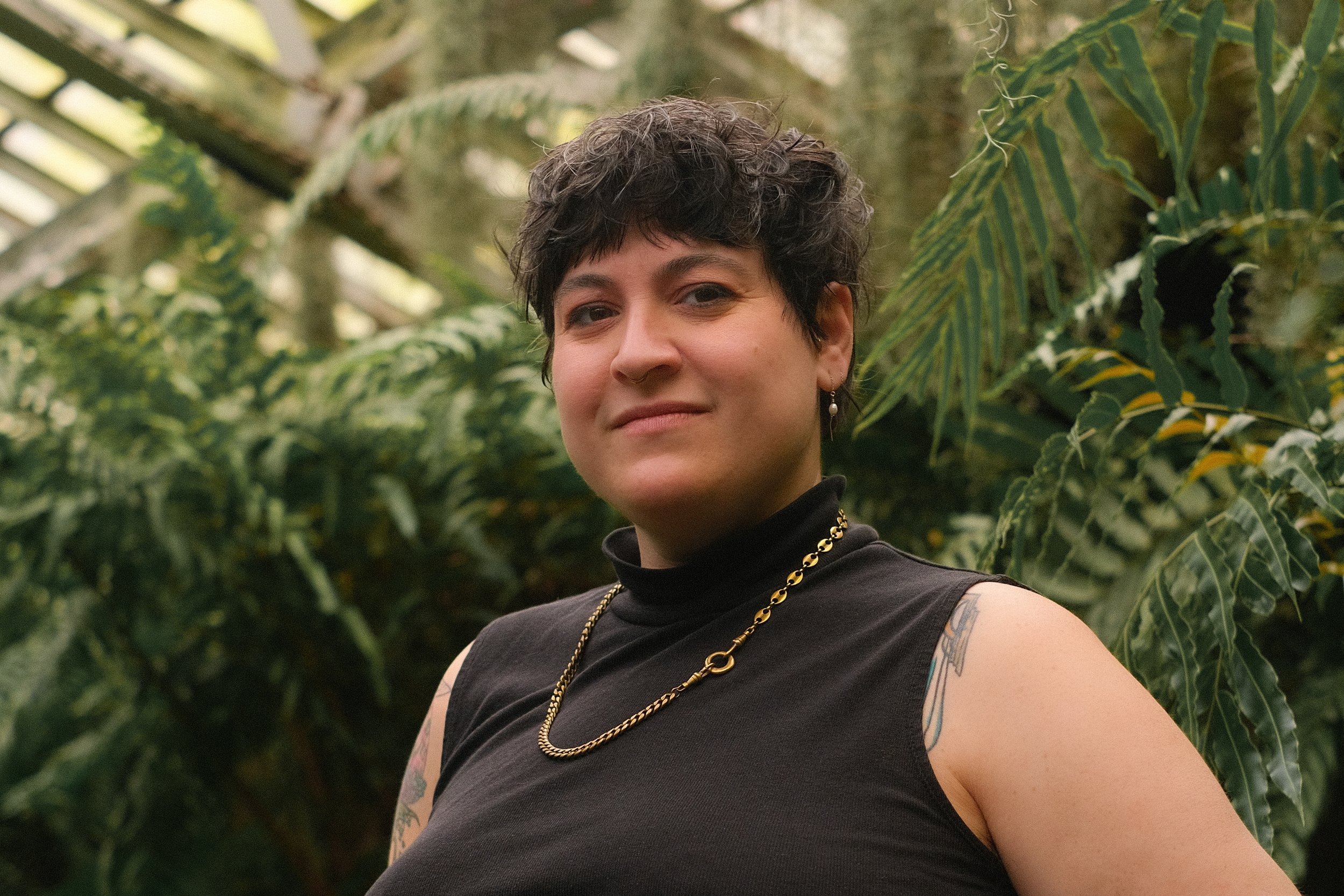
Hi, I’m Ellis
(they/them/elle)
I'm a narrative strategist and movement communications specialist invested in opportunities to drive intersectional communications work with greater knowledge, deeper collaboration, and more kaleidoscopic strategy. I have worked with non-profit and philanthropic organizations, advocates, practitioners, and grassroots groups to shift perspectives and policy, create organizational change strategy, and build partnerships that center community-driven decision-making.
I bring a broad range of experience building strategic digital organizing supports for grassroots organizers to develop radically responsive communications. I lead organizations through messaging work that rises to this moment of cultural warfare to underscore cross-movement connections and shared values that hold us together through feelings of crisis and powerlessness. In this work, I build narrative power that dismantles white supremacist infrastructure and disrupts the liberalist custodial violence that maintains it.
My work with organizations is guided by a commitment to Narrative Justice. Narrative builds power for people, or it is not useful at all. Meaningful narrative change is not possible without the amplification of marginalized voices to create leverage over those who maintain the unjust rules and norms that shape society. It means having the power to defeat established oppressive systems that seek to close down the opportunities we need to open up to achieve real impact at the policy, community and individual levels.
Organizational Partners